Job Posting: Law Clerk/Staff Attorney Ho-Chunk Nation Trial Court

Law Clerk/Staff Attorney

Ho-Chunk Nation Trial Court (Black River Falls, WI)

Position Type: Judicial Clerkship
Practice Area(s): Indian/Native American
Geographic Preference: Midwest (KY, WV, OH, IN, MI, IL, MO, IA, MN, WI)
Description: The Ho-Chunk Nation Trial Court is currently seeking a Law Clerk/Staff Attorney to assist

judges with conducting research, drafting opinions, maintaining the Judiciary’s website,

preparing monthly bulletins, and answering procedural questions from the general public.

A full job description is available at http://www.ho-chunknation.com/?PageId=107.

The position’s start date is negotiable, and Spring 2013 graduates are encouraged to

apply. Ho-Chunk Nation/Native American Preference will apply during the application process.

Desired Class Level: 3L, RECENT GRADS, Alum 0-3 yrs exp, LLM
Posting Date: January 28, 2013
Expiration Date: March 1, 2013
contact: Ms. Mary Thunder

Clerk of Court

W9598 Highway 54 East Black River Falls, Wisconsin 54615 United States

http://www.ho-chunknation.com/?PageId=28

Resume Receipt: Other (see below)
How To Apply: Please mail a resume, cover letter, transcript, writing sample not to exceed ten (10) pages,

and list of three (3) references with contact information to the following location:

Ho-Chunk Nation Trial Court
P.O. Box 70
Black River Falls, WI 54615

Alternatively, applicants may send the requirement documentation in the form of a single,

consolidated PDF file to the following e-mail address:

Mary.Thunder@ho-chunk.com

Regardless of submission method, all documents must be received before March 1, 2013 at

4:30 p.m. CST to receive consideration.

Additional Documents: Cover Letter, Unofficial Transcript, Writing Sample, Other Documents
id: 22035


Tribal citizenship in a globalized world to be examined at College of Law’s annual William C. Canby Jr. Lecture

01/16/2013

Stacy L. Leeds
 
 William C. Canby Jr.

Stacy L. Leeds, Dean of the University of Arkansas School of Law, will deliver the Sixth Annual William C. Canby Jr. Lecture on Thursday, Jan. 24, at the College of Law. The title of Leeds’ talk is “Whose Sovereignty? Tribal Citizenship, Federal Indian Law, and Globalization.”

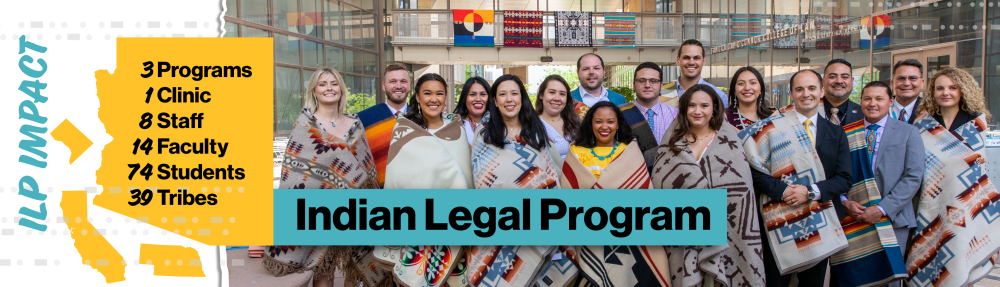
The lecture, presented by the Indian Legal Program (ILP) at the College, is scheduled to begin at 4:30 p.m. in the Great Hall of Armstrong Hall on the Tempe campus. It is free and open to the public, and will be followed by a reception in the Steptoe & Johnson Rotunda. Click here for free tickets.

The lecture honors Judge William C. Canby Jr. of the United States Court of Appeals for the Ninth Circuit, a founding faculty member of the College of Law. Judge Canby taught the first classes in Indian law there and was instrumental in creating the ILP.

Leeds, the first American Indian woman to serve as dean of a law school, has worked with tribes for more than two decades, interpreting tribal law and serving as a judge for many tribes, including the Cherokee Nation.

“I will discuss how foundational principles of tribal sovereignty developed domestically and how those principles may evolve in the future, including issues of internal and external government accountability, interaction with other nations, and enforcement of tribal rights,” Leeds said.

She said it is important to understand the context in which Native American tribes have defined citizenship in the past in order to predict how it will be defined in the future.
“We are witnessing a global awakening currently with respect to indigenous sovereignty,” Leeds said.

The question is whether tribal sovereignty will be affected by globalization, she said. If this is the case, it could mean a much more complex relationship between the federal government and tribal governments in the future.

For years, the U.S. government has refused to recognize tribal sovereign powers while simultaneously endorsing and supporting similar powers in newly created sovereigns around the globe, Leeds said. However, she noted, we are starting to see positive change as international law plays a greater role within the U.S.

“Enhanced global recognition of tribal government stature is finally being realized to some extent,” Leeds said. “But it will necessarily open tribes up to more internal and external scrutiny, and communities have to be ready for that.”

Doug Sylvester

“We are delighted to welcome Dean Leeds to the College of Law to deliver our Canby Lecture,” said Dean Douglas Sylvester. “Her expertise in tribal sovereignty, as well as her accomplishments in the Native American community and in legal academia, make her an ideal fit for this important program.”

As part of the larger discussion, Leeds said she will touch briefly on the Cherokee Freedman Controversy, a political and tribal dispute between the Cherokee Nation and descendants of the Cherokee Freedmen regarding tribal citizenship. As a judge for the Cherokee Nation, she in 2006 wrote the majority opinion in Allen v. Cherokee Nation Tribal Council that ruled the Freedmen, a group of African-American descendents of former slaves of the Cherokee, were entitled to full citizenship in the tribe.

“Stacy has long been a leader in education and tribal government,” said Robert Clinton, Foundation Professor of Law at the College of Law. “At a time when the Cherokee Freedman controversy was heating up at the Cherokee Nation, her courageous opinion for the Cherokee Nation Supreme Court was widely heralded, although controversial.”

Clinton added that Leeds has been a pioneer as a Native American scholar and author, and her contributions to the field of Indian law are widely respected.

“I am very honored to be a part of this lecture series and to contribute to the world-class work of the Indian Legal Program at ASU,” Leeds said. “The program has a fantastic reputation and a vibrant Indian law curriculum.”

Before arriving at the University of Arkansas, Leeds was Interim Associate Dean for Academic Affairs at the University of Kansas School of Law and director of the Northern Plains Indian Law Center at the University of North Dakota School of Law. She has taught law at the University of Kansas, the University of North Dakota and the University of Wisconsin School of Law.

Leeds was the first woman and youngest person to serve as a Justice on the Cherokee Nation Supreme Court. She teaches, writes and consults in the areas of American Indian law, property, energy and natural resources, economic development, judicial administration and higher education.

Job Posting – Counselor to the Assistant Secretary-Indian Affairs

Counselor to the Assistant Secretary-Indian Affairs
Department:Department Of The Interior
Agency:Office of the Secretary of the Interior
Job Announcement Number:AG-13-PQ824547 (DEU)

SALARY RANGE:

$105,211.00 to $136,771.00 / Per Year

OPEN PERIOD:

Monday, January 14, 2013 to Friday, January 18, 2013

SERIES & GRADE:

GS-0301-14

POSITION INFORMATION:

Full Time – Permanent

PROMOTION POTENTIAL:

14

DUTY LOCATIONS:

1 vacancy in the following location:
Washington DC, DC United StatesView Map

WHO MAY APPLY:

United States Citizens

JOB SUMMARY:

Indian Affairs is the lead agency for the United States in carrying on a government-to-government relationship with the tribal nations. A challenging and dynamic place to work, it enhances the quality of life, promotes economic opportunity, and carries out the responsibility to protect and improve the trust assets of American Indians, Indian tribes and Alaska Natives.


This position is located in the Office of the Assistant Secretary – Indian Affairs in Washington, DC.  The mission of the Office of the Assistant Secretary – Indian Affairs is to enhance the quality of life, to promote economic opportunity, and to carry out the responsibility to protect and improve the trust assets of American Indians, Indian Tribes and Alaska Natives.  The incumbent of this position serves as a Counselor to the Assistant Secretary – Indian Affairs, focusing on maintaining liaison with other offices and bureaus that encompass the Indian Affairs organization.  The incumbent will consult with tribal leaders and communities, departments, congressional committee staffs and others within the private sector to carry out duties.  The role of the incumbent is that of an advisor in policy determining issues and related matters of a confidential and administrative support nature. 

This position is being advertised concurrently with (AG-13-PQ824548) using Merit Promotion procedures.  Status applicants who wish to be considered under both merit promotion and competitive examining procedures must apply directly to each announcement.__________________________________________________________________________________

Who May Apply

  • U.S. Citizens

KEY REQUIREMENTS

  • U.S. Citizenship required
  • This position is subject to a pre-employment background investigation
  • Relocation expenses may be paid.
  • Travel may be required.

DUTIES:

Back to top

 The major duties of the position include, but are not limited to the following:

  • Coordinates assigned activities to ensure compliance with the Administration’s policies.  Provides coordination, liaison and initial review on matters pertaining to the program areas under the supervisor’s purview.
  • Assignments are complex, important and diversified in scope and may be within any jurisdiction of the Indian Affairs programs.  Assignments may be of a nonrecurring nature, and the incumbent is responsible for research and conducting special studies or surveys of problems, projects, or program implementation.
  • Produces briefings, decision memorandum and background papers on a wide variety of issues, problems or matters.  Develops strategies on sensitive and controversial issues and serves in a confidential capacity on organizational and internal matters.
  • Works with Departmental program and staff officials to assure that projects assigned are coordinated to meet the objectives of Indian Affairs and are ready for action or endorsement by the Assistant Secretary.  Participates in meetings called for the purpose of briefing key officials when assignments will require coordination between two or more program offices.
  • Participates in staff conferences and meetings called by the supervisor.  Contributes to program discussion and developments by citing current status of program involvement.  Notes and follows up on assignments made by the supervisor during these conferences and meetings.
  • Working closely with the top leadership staff of the Indian Affairs organization, the incumbent develops, coordinates, resolves and implements a variety of special projects which may be highly sensitive, confidential and of national importance.  Completes in-depth analysis of issues of importance to top leadership staff within Indian Affairs, which is frequently needed in very short time frames.
  • Follows legislative matters of interest to the Indian Affairs organization and programs to keep the supervisor informed of their status and progress.  Utilizes knowledge of the supervisor’s viewpoints in the general review of proposed legislation in order to highlight and bring to his/her attention those portions of bills which conflict with current Indian Affairs policy.  Recommends policy alternatives to be incorporated as needed.

QUALIFICATIONS REQUIRED:

Back to top

 GS-14:  All applicants must possess at least one full year of specialized experience equivalent to at least the next lower grade level (GS-13), which includes: 1) analyzing proposed legislation and evaluating the impact such legislation may have on one’s organization; 2) preparing, presenting, and defending proposed recommendations, policies, or regulations; 3) developing and delivering verbal presentations to high level officials on sensitive or controversial topics; AND 4) serving as spokesperson or representative for an organization or senior official.

All qualification requirements must be met by the closing date of this announcement Friday, January 18, 2013.   Additional information on the qualification requirements is outlined in the OPM Qualifications Standards Handbook of General Schedule Positions. It is available for your review in our office, in other Federal agency personnel offices, and on OPM’s web site at http://www.opm.gov/qualifications.

Applications will be reviewed after the closing date of Friday, January 18, 2013.  Qualified applicants will be rated based on their possession of the knowledge and experience requirements identified under the “Qualifications” section.  Candidates rated as best qualified will be referred to the hiring manager for further consideration.

Category Rating will be used in the ranking and selection process for this position.  The categories are Best Qualified, Well Qualified, and Qualified.  Veterans’ preference rules for category rating will be applied.

  • Analytical Ability
  • Communication
  • Knowledge of legal research procedures, methods, and sources

Selective Service:  If you are a male applicant who was born after 12/31/1959 and are required to register under the Military Selective Service Act, the Defense Authorization Act of 1986 requires that you be registered or you are not eligible for appointment in this agency.


Public Interest Indian Law Fellowship Program

Public Interest Indian Law Fellowship Programs

Berkey Williams LLP (Berkeley, CA)

Position Type:  Fellowship

Practice Area(s): Indian/Native American

Geographic Preference(s): West (CA, HI, NV, UT, CO, MT, WY)

Description: Berkey Williams Public Interest Indian Law Fellowship

Berkey Williams LLP (BW) established the Public Interest Indian Law Fellowship Program in 2005. The aims of the Fellowship are to encourage recent law graduates to work in the field of Indian law and to provide the Fellows with an opportunity to pursue public interest projects in Indian country. The Fellow is encouraged to develop innovative legal strategies for projects which may not traditionally be feasible endeavors for a private law firm. The Firm’s intent is to provide bright, creative law graduates with the time and resources to tackle public interest, social justice, and related issues in Indian country. The Fellowship intends to contribute to the development of public interest Indian law leaders of the future, whatever their career paths might be.

About Berkey Williams

The firm is a private, for-profit partnership with a significant public interest focus. The firm has three attorneys and two paralegals in Berkeley, California, one attorney in Washington, DC, one attorney in Bozeman, Montana, two attorneys in New York, and one attorney in New Mexico. The firm works exclusively for Indian tribes and tribal organizations, and currently has clients throughout the United States. Natural resources protection, environmental justice, water and fishing rights, recovery of ancestral lands, tribal sovereignty, self-governance, economic development, Indian child welfare, employment, and health care are representative areas of work. The Firm’s work is funded primarily by its fee-paying tribal clients, as well as generous contributions from private foundations. More information may be found at the firm’s web site: www.berkeywilliams.com.

 About the Fellowship

The one-year Fellowship offers a competitive salary, full benefits, training, flexibility in balancing work and a private life, and the opportunity to work with experienced attorneys in an established firm focused exclusively on serving Indian tribes and tribal organizations. The Fellow will work in the California office. The Fellowship begins in September, 2013, with some flexibility depending upon the candidate’s schedule. Berkey Williams is committed to recruiting attorneys who will bring a variety of experiences to the firm’s clients, and to supporting them by providing the resources necessary to building a strong career in Indian law.

The projects on which a Fellow might work are subject to the creativity of the Fellow and the needs or demands of a particular client tribe or tribal organization. In the past, the Berkey Williams Fellow has worked for organized but unrecognized California tribes seeking to protect cultural sites threatened by land development, and tribes whose children are subject to state juvenile dependency proceedings. The Firm’s public interest and pro bono work includes projects intended to protect cultural sites, promote Indian-organized educational institutions, connect Indian communities to electric and telecommunications grids, recover ancestral lands, expand economic development opportunities for tribes, and others.

Qualifications and Selection Criteria

Applications are encouraged from recent law graduates with a demonstrated commitment to Indian law. Preference is given to candidates, both Indian and non-Indian, who demonstrate personal or professional experience and identification with Indian communities. High academic achievements are certainly considered, but they are weighed with other equally significant factors: personal accomplishments, professional goals, cultural competence, and the capacity to work conscientiously and independently as needed. Candidates with interest in specific public interest projects are encouraged to bring their proposals to the firm. Candidates are encouraged to seek their own funding as well, as the firm’s ability to offer the fellowship is contingent on funding. Membership in the California Bar, or the Bar of another state, though not essential, is a significant factor in the firm’s evaluation of candidates.

Applying for the Fellowship

Interested law graduates should send a resume and a writing sample to Gloria Coronado, Administrative Assistant, at gcoronado@berkeywilliams.com. If you have any questions, please email. Deadline to apply is January 31, 2013.

Desired Class Level:  RECENT GRADS

Posting Date: December 17, 2012

Expiration Date: January 31, 2013

Contact: Gloria Coronado, Administrative Assistant

2030 Addison Street Suite 410 Berkeley, California 94704 United States

Sample Page

Resume Receipt:  E-mail, Other (see below)

Default email for resumes.: gcoronado@berkeywilliams.com

How to Apply:

Interested law graduates should send a resume and a writing sample to Gloria Coronado, Administrative Assistant, at gcoronado@berkeywilliams.com. If you have any questions, please email. Deadline to apply is January 31, 2013.

Additional Documents:

Writing Sample, Other Documents

 ID: 21907
Job Posting – Attorney Advisor DOJ Office of Tribal Justice

Subject: OPENING: Attorney Advisor DOJ Office of Tribal Justice

I would like to share with you and ask you to disseminate the following vacancy announcement.  The Office of Tribal Justice (OTJ) for the U.S. Department of Justice is seeking an experienced attorney to serve as Attorney Advisor to provide counsel and assistance to the Director and Deputy Directors.

Justice seeks to attract, retain, and promote individuals of exceptional ability and talent from all walks of life. The work environment and atmosphere is open, diverse, collegial, and inclusive. There are active affinity groups for African-American; Asian-American; Hispanic; lesbian, gay, bisexual and transgender (LGBT); and Native American employees, which are open to all DOJ employees regardless of background. Justice fosters a work environment where people of all backgrounds and experiences may reach their full potential.

Thank you for your help in disseminating this vacancy announcement.  This and other attorney vacancy announcements can be found at: http://www.justice.gov/careers/legal/attvacancies.html.

OFFICE OF TRIBAL JUSTICE (OTJ)
Attorney ADVISOR / GS-13 to GS-15
ANNOUNCEMENT: OTJ ATY-13-001

About the Office: The Office of Tribal Justice (OTJ) is the primary point of contact for the Department of Justice with federally recognized Native American tribes, and advises the Department on legal and policy matters pertaining to Native Americans. OTJ promotes internal uniformity of Department policies and litigating positions relating to Indian country and ensures that the Department clearly communicates policies and positions to tribal leaders.

Responsibilities and Opportunity Offered: OTJ is seeking an experienced attorney to serve as Attorney Advisor to provide counsel and assistance to the Director and Deputy Directors. OTJ attorneys:

  • Provide advice on significant tribal justice matters and assist in policy and legislative development and review.
  • Provide advice to OTJ leadership on Department components litigating, protecting or otherwise addressing Native American rights and/or related issues.
  • Review proposed legal actions submitted by divisions that require OTJ approval or coordination.
  • Perform legal research on assigned questions or law or policy and prepare reports and memoranda.
  • Assist in coordinating with attorneys and officials of the Department, other government agencies, and interested parties to provide guidance and advice to ensure compliance with statutory, regulatory and policy requirements.
  • Assist in maintaining liaison with federally recognized tribes, and work with the appropriate federal, tribal, state, and local officials, professional associations, and public interest groups.
  • Develop, coordinate and execute special projects as assigned by the Director or the Deputy Directors.

Qualifications: Applicants must possess a J.D. degree with at least two years of post J.D. experience, and be an active member of a bar (any jurisdiction). Applicants must be proficient in analyzing complex legal information and producing clear and thorough written work, and have excellent interpersonal skills. Experience or familiarity with Federal Indian Law is required. Prosecution and/or litigation experience is strongly preferred but not required. The incumbent must be able to obtain a Secret-level security clearance.

Travel: Frequent.

Location: Main/RFK Building, Washington, DC.

Salary Information: The salary level is in the GS-13 to GS-15 ($89,033 – $155,500) range.

Submission Process and Deadline: Applicants are required to submit a cover letter (highlighting relevant experience) and resume or OF-612 (Optional Application for Federal Employment). Please reference announcement OTJ ATY-13-001 in your cover letter.

Applicants are encouraged to email applications to OTJ@usdoj.gov or fax them to (202) 514-9078 rather than mail them. No telephone calls please. This vacancy will be open until January 11, 2013 or until a selection has been made.

U.S. Department of Justice
Office of Tribal Justice(Attn: Application Coordinator)
950 Pennsylvania Ave., N.W., Room 2318)
Washington, D.C. 20530

Other legal position announcements may be found on the Internet at: http://www.usdoj.govand http://dojnet.doj.gov/oarm/attvacancies.php.

Department Policies: The U.S. Department of Justice is an Equal Opportunity/Reasonable Accommodation Employer. Except where otherwise provided by law, there will be no discrimination because of color, race, religion, national origin, political affiliation, marital status, disability (physical or mental), age, sex, gender identity, sexual orientation, genetic information, status as a parent, membership or non-membership in an employee organization, on the basis of personal favoritism, or any non merit factor. The Department of Justice welcomes and encourages applications from persons with physical and mental disabilities. The Department is firmly committed to satisfying its affirmative obligations under the Rehabilitation Act of 1973, to ensure that persons with disabilities have every opportunity to be hired and advanced on the basis of merit within the Department of Justice. This agency provides reasonable accommodation to applicants with disabilities where appropriate. If you need a reasonable accommodation for any part of the application and hiring process, please notify the agency. Determinations on requests for reasonable accommodation will be made on a case-by-case basis.

It is the policy of the Department to achieve a drug-free workplace and persons selected for employment will be required to pass a drug test which screens for illegal drug use prior to final appointment. Employment is also contingent upon the completion and satisfactory adjudication of a background investigation. Only U.S. citizens are eligible for employment with the Executive Office for Immigration Review and the United States Attorneys’ Offices. Unless otherwise indicated in a particular job advertisement, non-U.S. citizens may apply for employment with other organizations, but should be advised that appointments of non-U.S. citizens are extremely rare; such appointments would be possible only if necessary to accomplish the Department’s mission and would be subject to strict security requirements. Applicants who hold dual citizenship in the U.S. and another country will be considered on a case-by-case basis.

There is no formal rating system for applying veterans’ preference to attorney appointments in the excepted service; however, the Department of Justice considers veterans’ preference eligibility as a positive factor in attorney hiring. Applicants eligible for veterans’ preference must include that information in their cover letter or resume and attach supporting documentation (e.g., the DD 214, Certificate of Release or Discharge from Active Duty and other supporting documentation) to their submissions. Although the “point” system is not used, per se, applicants eligible to claim 10-point preference must submit Standard Form (SF) 15, Application for 10-Point Veteran Preference, and submit the supporting documentation required for the specific type of preference claimed (visit the OPM website, www.opm.gov/forms/pdf_fill/SF15.pdf for a copy of SF 15, which lists the types of 10-point preferences and the required supporting document(s). Applicants should note that SF 15 requires supporting documentation associated with service-connected disabilities or receipt of nonservice-connected disability pensions to be dated 1991 or later except in the case of service members submitting official statements or retirement orders from a branch of the Armed Forces showing that his or her retirement was due to a permanent service-connected disability or that he/she was transferred to the permanent disability retired list (the statement or retirement orders must indicate that the disability is 10% or more).

***

The Department of Justice cannot control further dissemination and/or posting of information contained in this vacancy announcement. Such posting and/or dissemination is not an endorsement by the Department of the organization or group disseminating and/or posting the information.


Job Posting – Chief Judge, Standing Rock Tribal Court

Job Announcement

Chief Judge
Standing Rock Tribal Court, Fort Yates, N.D.

OPEN: Until Filled
SALARY: Negotiable

The Standing Rock Sioux Tribe is soliciting applications for employment of a Chief Judge for the Standing Rock Tribal Court, as an independent contract employee.

The Chief Judge position will be a full time position. The number of hours, days of employment and compensation are all negotiable. The terms of employment will be determined by the agreement of the parties. The contract shall be compensated on an hourly basis.

The statutory prerequisites for employment are: 1) must be at least 25 years of age; 2) must be of high moral character and integrity; 3) must never have been convicted of a criminal offense, other traffic offenses, for which punishment of imprisonment was imposed; 4) must not have been dishonorably discharged from the Armed Services; 5) must be physically able to carry out the duties of the office and 6) must possess a degree of law from an (ABA) accredited law school and a member in good standing of the bar of any state or federal court.

Applications shall be in writing, to include a professional Resume, legal qualifications and any other submissions at the option of the applicant. All applications are considered on merit.

Applications and any inquiries regarding the Chief Judge position may be directed or submitted to Ms. Dellis M. Agard, Court Administrator, Standing Rock Tribal Court, PO Box 363, Fort Yates, ND, Telephone (701) 854-7244 or by Email to dagard@standingrock.org.

The worksite for this position is located at the Standing Rock Tribal Court in Fort Yates, ND. The Sitting Bull College Transit provides bus services, at nominal cost, to and from Bismarck, ND; Mobridge, SD; McLaughlin, SD and Selfridge, ND, coordinated with the tribal work day, which is 8:00 AM to 4:30 PM (Central Time).