Clinton on panel at Appellate Judges Educational Institute

Clinton on panel at Appellate Judges Educational Institute

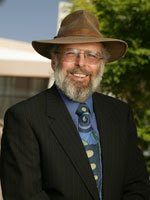
Robert N. Clinton Professor Robert N. Clinton of the Indian Legal Program will speak on a panel, “One Country, Separate Sovereigns: Emerging Issues in Indian Law,” at the Appellate Judges Education Institute this weekend. The conference, which brings together federal and state appellate judges, appellate staff attorneys and appellate lawyers, will be held at the Doubletree Paradise Valley Resort in Scottsdale on Nov. 13-16. Also on the panel with Clinton will be Judge William Canby Jr. of the 9th U.S. Circuit Court of Appeals and a founding faculty member of the College of Law, Judge Joseph Thomas Flies-Away of the Hualapai Tribal Court, and Elizabeth Rosenbaum, an Indian law practitioner. The panel will be moderated by Charles G. Cole of Steptoe & Johnson. Retired U.S. Supreme Court Justice Sandra Day O’Connor will speak at the annual dinner on Nov. 15. Clinton teaches and writes about federal Indian law, tribal law, and Native American history, constitutional law, federal courts, civil procedure and copyrights. He also serves as Chief Justice of the Winnebago Supreme Court, as Associate Justice of the Cheyenne River Sioux Tribal Court of Appeals, as Associate Justice for the Colorado River Indian Tribes Court of Appeals, and the Hualapai Nation Court of Appeals, and as a temporary judge for other tribes.

Conference at ITCA

Inter Tribal Council of Arizona, Inc.
“Future Directions of Tribal Health Research in Arizona”
Radisson Fort McDowell Resort & Casino
October 30-31, 2008

  • What is Community Based Participatory Research?
  • How does “Academic Freedom” apply to Indian Country?
  • What is the history of tribal health resarch in Arizona?
  • Where do we go from here?

Professor Tsosie will be a presenter during this event.

Two Weeks until the IGRA Conference: Register Now

Indian Country’s Winning Hand: 20 Years of IGRA
October 16-17, 2008
Radisson Fort McDowell Resort & Casino
Scottsdale/Fountain Hills, Arizona
Visit the conference website to learn more about the conference and registration for the event!www.law.asu.edu/ILP
Stay the weekend so you can attend NCAI!
65th Annual Convention and Tradeshow
Sunday, October 19, 2008 1:00 PM – Friday, October 24, 2008 1:00 PM
Phoenix Convention Center

Tsosie a panelist at ABA Law Summit

Professor Rebecca Tsosie will join a panel discussion at the ABA Environment, Energy, and Resources Law Summit: 16th Section Fall Meeting, on Sept. 17-20 at the Arizona Biltmore Resort & Spa in Phoenix. Tsosie, executive director of the Indian Legal Program at the Sandra Day O’Connor College of Law and a Willard H. Pedrick Distinguished Research Scholar, will participate in the panel, “Tribal Sacred Places and Cultural Resources on Public Lands,” on Thursday, Sept. 18. Tsosie will be joined on the panel by Diane J. Humetewa, U.S. Attorney for the District of Arizona, and a 1993 alumna of the College of Law, and Jack Trope, executive director of the Association on American Indian Affairs. Indian tribes regard many places outside reservation boundaries as holding religious and cultural importance, and the National Historic Preservation Act does require federal agencies to consult with tribes when such places are affected by their actions. The trio will discuss whether these consultations have been acceptable to all parties. The meeting, sponsored by the American Bar Association’s Section of Environment, Energy, and Resources, will offer more than 25 Continuing Legal Education programs, along with a public-service project, keynote addresses and various networking opportunities.

IGRA Pathbreakers Named

Native Americans to be honored for their contributions to Indian gaming rights

Six people who have worked to protect and expand Indian gaming rights since the inception of the Indian Gaming Regulatory Act 20 years ago will be honored this fall by the Sandra Day O’Connor College of Law at Arizona State University.

The individuals, named “Pathbreakers” for their leadership in helping tribes achieve economic freedom, will be lauded during a national conference sponsored by the College’s Indian Legal Program. “Indian Country’s Winning Hand: 20 Years of IGRA” will be Thursday and Friday, Oct. 16-17, at the Radisson Fort McDowell Resort & Casino in Scottsdale/Fountain Hills. The Pathbreaker’s Banquet will be Oct. 16 in the resort’s Courtyard Plaza.

Robert Clinton, Foundation Professor of Law and a co-chair of the conference’s planning committee, said Indian gaming has been the “white buffalo of the reservation economies, providing the first successful means of economic self-sufficiency for many tribes since their traditional economies were destroyed or decimated through the processes of non-Indian settlement of their former lands.”

The Pathbreakers, who were selected by their peers on a committee comprising leaders of major Indian gaming organizations and programs, have been in the forefront of efforts to restore tribal self-sufficiency and respect for tribal sovereignty, Clinton said.

“They are modern-day warriors who have successfully and selflessly fought important battles for their people, without any thought of personal gain — the mark of a true tribal leader,” Clinton said. “We are privileged and honored to recognize and celebrate the important work and accomplishments of these Indian Gaming Pathbreakers.”

The six are:
· Frank L. Chaves, Former Chairman, New Mexico Indian Gaming Commission. Chaves has worked on gaming issues with tribal governments in New Mexico for more than 12 years. A member of the Pueblo of Sandia, he served as the director of economic development for the Pueblo and was co-chair of the New Mexico Indian Gaming Association.
· Richard G. Hill Sr., Chairman, Oneida Nation of Wisconsin. For nearly 20 years, the Hill name has been synonymous with Indian gaming and tribal economic development. He is a former chairman and spokesperson for the National Indian Gaming Association (NIGA), and he led a national negotiating team in the 1990s to resolve conflicts over Indian gaming between the states and tribal leaders.
· John A. James, Chairman, Cabazon Band of Mission Indians. James has been at the forefront of Indian gaming in California for several decades, from bringing high-stakes bingo to the Cabazon in the 1980s to developing a premiere gaming destination in Southern California. He also is chairman of the Cabazon’s Business Committee and a former executive secretary of NIGA.
· Mark Macarro, Chairman, Pechanga Band of Luiseño Indians. With the support of the California Nations Gaming Association, Macarro served as spokesman for a number of successful Indian gaming ballot initiatives in that state. He represents the Pechanga in the National Congress of American Indians (NCAI) and on the board of directors of the NIGA, and is chairman of the Riverside County Sheriff Native American Affairs Commission.
· Clinton M. Pattea, President, Fort McDowell Yavapai Nation. Pattea has served on the Nation’s Tribal Council for more than four decades. Arizona’s success in Indian gaming often is attributed to the visionary leadership of Pattea, who was involved in negotiations in the 1990s with then-Gov. Fife Symington who’d refused to discuss a compact with the Nation.
· Ernest L. Stevens Jr., Chairman, National Indian Gaming Association. First elected in 2001, Stevens is in his fourth term at the IGRA helm. He is a former councilman for the Oneida Nation and former first vice-president and treasurer of the NCAI. Stevens recently received the 2008 Gaming Executive of the Year award from the International Masters of Gaming Law.

The conference is a balanced 20-year retrospective of the successes, failures and impact of the Indian Gaming Regulatory Act of 1988. The conference sponsors are offering an early registration rate of $350, through Sept. 15; thereafter, the rate is $450, through Oct. 10. Pathbreaker’s Banquet tickets are being sold separately for $100 each, through Oct. 8. To register or order tickets, go to www.law.asu.edu/ilp. For more information, call Darlene Lester at (480) 965-7715.

Homeland Security CLE

Homeland Security in Indian Country
http://www.abanet.org/cle/programs/t08hsi1.html

Next Wednesday, July 23, 20081:00 PM – 2:30 PM Eastern 12:00 PM – 1:30 PM Central11:00 AM – 12:30 PM Mountain 10:00 AM – 11:30 AM Pacific

Since 9/11, there has been a number of issues involving the intersection of tribal sovereignty and homeland security. Many reservations are located along the U.S. border and are therefore vital to the efforts of the Department of Homeland Security (DHS) in securing the nation. DHS now provides funding to tribal governments for this purpose. But despite the fact that tribes have all the same law enforcement and homeland security responsibilities as state governments, 9/11 legislation and administrative policy have not always integrated tribal governments.
Attend this teleconference and live audio webcast to learn about the unique issues tribal governments face in addressing homeland security issues and in working with DHS and the Department of Justice (DOJ). Diane Humetewa will address DOJ’s position on matters affecting homeland security, especially after 9/11. Edward Reina will address Indian Country law enforcement efforts, and the limitations under which tribal police work. Heather Dawn Thompson will address how tribal governments are approaching DOJ, the DHS, and Congress about working together on tribal homeland security issues.

Kirke Kickingbird (Moderator), Chair, IRR Native American Concerns Committee; Of Counsel, Hobbs, Strauss, Dean & Walker, LLP, Oklahoma City, OK

Diane Humetewa, U.S. Attorney for the District of Arizona, The United States Attorney’s Office for the District of Arizona, Phoenix, AZ

Edward Reina, Director of Public Safety, Tohono O’odham Nation,Sells, AZ

Heather Dawn Thompson, Director of Government Affairs, National Congress of American Indians, Washington, DC

Horizon to feature Bender

Professor Paul Bender of the Sandra Day O’Connor College of Law will give his annual review of U.S. Supreme Court cases during “Horizon,” airing at 7 p.m. on Thursday, July 24, on KAET-TV Channel 8. Bender is expected to address several major rulings of the court, including one pertaining to the Washington, D.C., handgun ban and its upholding of habeas corpus for Guantánamo Bay prisoners. He also will discuss the court’s upcoming session and the impact that the outcome of the presidential race will have on the court’s makeup. The program will be repeated on Monday, Aug. 18.

JOB – UC Legal Writing

University of Colorado at Boulder
School of Law
Legal Writing Instructor
Job Posting

CU Law is hiring a Legal Writing Professor beginning in August 2008. For a complete job description, go to www.jobsatcu.com and see posting # 804468. The position requires a J.D. and teaching experience is highly desirable. The search committee will begin considering applications on June 20, 2008.

JOB: SRPMIC Legal Services Office Managing Attorney

Legal Services Office Managing Attorney
Job Description

Under general supervision of the Community Manager and under general legal supervision of the Office of the General Counsel, provides supervision and guidance to the staff of the Salt River Legal Services Office (SRLSO). Provides legal services and representation to eligible clients. This job class is treated as FLSA Exempt.1. Maintains and oversees the operation of the Salt River Legal Services Office (SRLSO) in order to provide basic legal services to eligible clients. Develops the necessary administrative polices, procedures and forms for the SRLSO including intake, log sheets, interview questions and status reports.2. Provides legal services and representation to eligible clients of the SRLSO through tasks illustrated by, but not limited to, the following: interviewing clients, providing legal advice, conducting necessary research, drafting correspondence and preparing legal documents.3. Drafts and prepares legal documents, pleadings, motions, briefs and appeals. Represents clients in tribal, state and federal forums whether in court, administrative hearings or other appropriate forums.4. Provides administrative supervision to Advocates and support staff. Ensures that legal supervision, guidance and training is given to legal Advocates and support staff. Assigns work activities and projects, monitors work flow plus reviews and evaluates work products, methods, and procedures. Completes performance evaluations and approves leave requests and “time and labor” for assigned staff. 5. Prepares the proposed annual budget for the SRLSO and monitors expenditures. Prepares and submits quarterly and annual reports.6. Develops and participates in Community legal education projects.7. Promotes the existence of a team environment and facilitates positive motivation. Encourages staff growth and professional development with an emphasis on Community Member development and promotion. Encourages staff participation in on-going training and professional development and strengthening of individual skill levels. Coaches, motivates and mentors employees to perform their best.7. Manages the day-to-day administrative operations of the department and coordinates internal operations with appropriate Tribal Government Administration staff to insure administrative goals and planning objectives are met. Coordinates department operations with the Court and other relevant departments and agencies to meet overall objectives in accordance with Tribal strategic planning.8. Performs other job related duties as assigned to maintain and enhance departmental operations.
Skills/Requirements

Graduation from an accredited college or university with a Juris Doctorate degree AND three to five (3-5) years of law practice that includes general administrative experience and two or more years of trial experience in state and tribal courts.- Special Requirements: Membership and good standing in the AZ BAR is required. Must demonstrate a commitment to ongoing training and education. May be required to travel.

Job Reference #:
100292
Job Status:
Full Time
Date Posted:
6/3/2008
Pay Rate:
$88,583 to $128,449/year
Pay Comments

Advertised salary is the full range. Salary will be commensurate with experience and qualifications. SRPMIC offers a rich benefits package with too much to mention: Health Insurance, Prescription Drug Coverage, Vision Care, Dental, Paid Life, Employee Assistance Program, 401(k)Plan, Accrue 15 Paid Annual and 15 Sick Days Your First Year, 13 Recognized Holidays and more!
Important Notes

CLOSING DATE: July 1, 2008SRPMIC is an EQUAL OPPORTUNITY/AFFIRMATIVE ACTION EMPLOYERImportant notes: – Equivalent combinations of education and experience that will allow the applicant to satisfactorily perform the duties of the job may be considered- Will be required to pass a pre-employment drug test. In addition, may be required to pass fingerprint/background check.- “SRPMIC is an “Equal Opportunity/Affirmative Action Employer.” Preference will be given to a qualified Community Member, then a qualified Native American and then other qualified candidate.- Insurability: Must possess a valid Arizona operator’s license and be insurable under tribal insurer requirements (e.g., be age 21 or over, no alcohol-related motor vehicle violations such as DUI, within the past 3 years; no reckless driving violations within the past 3 years; no more than one speeding ticket in excess of 15 mph over the speed limit within the past 3 years; and no more than one “at fault” accident within the past 3 years).- NOTE: Applications or Resumes which are not in the Human Resources Office by 5 p.m. on the closing date will not be considered. SUBMIT APPLICATION TO: SRPMIC- Human Resources, 10,005 E. Osborn Scottsdale, Arizona 85256Fax#: (480) 850-8126 or Apply on line at SRPMICJOBS.com