MLS students receive spring 2026 scholarships

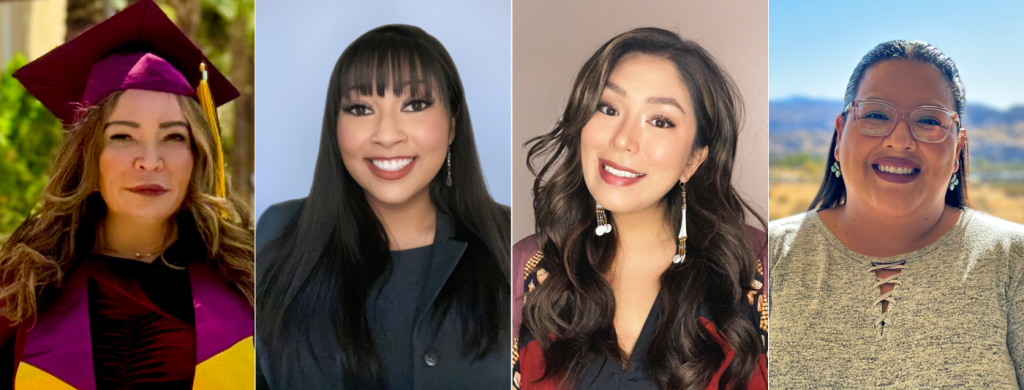
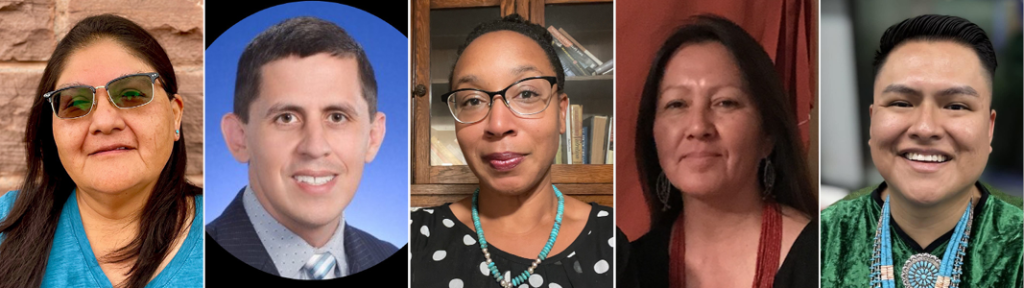
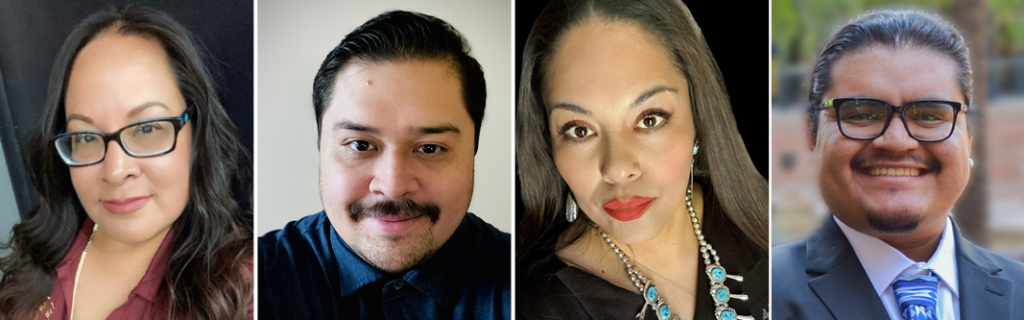
Congratulations to MLS students Yvette Alvarez, Anthony Dahkoshay, Jeannie Duncan and Brian Forkum, who were awarded scholarships for the spring 2026 semester.

Alvarez works for the Pascua Yaqui Tribal Court and is a certified lay advocate. Dahkoshay is a licensing and compliance specialist with the Maricopa County Department of Transportation. Duncan serves as a project coordinator and acting manager in the Land Title and Records Office for the Salt River Pima-Maricopa Indian Community. Forkum is a public archaeology intern with the Arizona State Historic Preservation Office.

“I am very honored to have been selected for this scholarship,” said Duncan. “It is truly amazing how donors’ contributions can make an impact on a person’s educational journey. Thank you to the Yuhaaviatam of San Manuel Nation for being part of my success and for the generosity you have given me as well as other students you have helped!”

The Indian Gaming and Tribal Self-Governance Programs join the students in thanking the Yuhaaviatam of San Manuel Nation for its continued support, which makes these scholarships possible and promotes students’ understanding of legal issues impacting Tribal Nations.

Governing for the Future

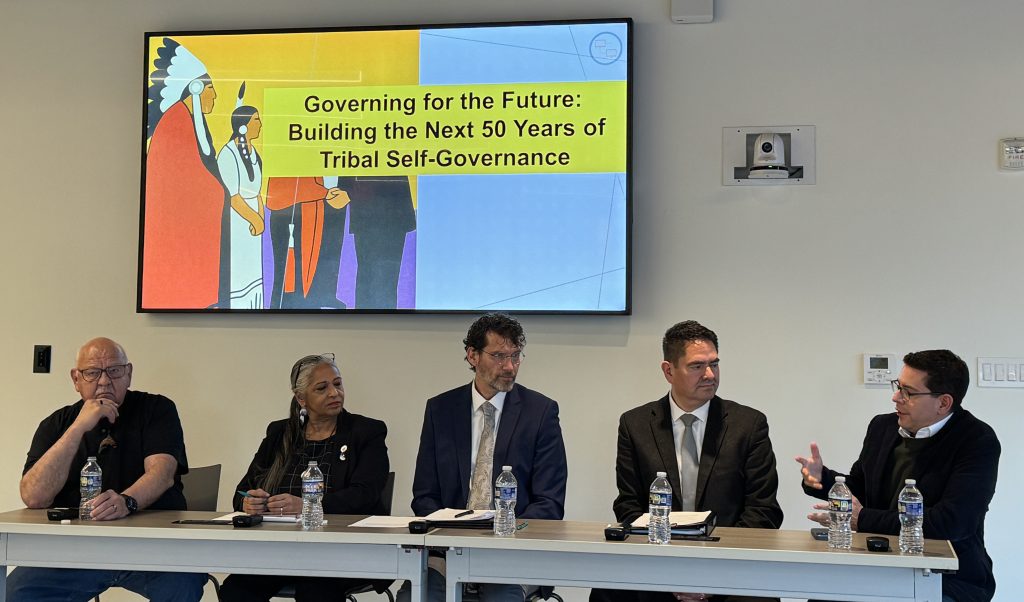
The Indian Legal Program and Tribal Self-Governance Program brought together Tribal leaders, federal officials, practitioners and scholars from across Indian Country for the webinar, “Governing for the Future: Building the Next 50 Years of Tribal Self-Governance,” on Dec. 11. The event commemorated the legacy of Tribal self-governance while exploring the opportunities and challenges that will shape its future.

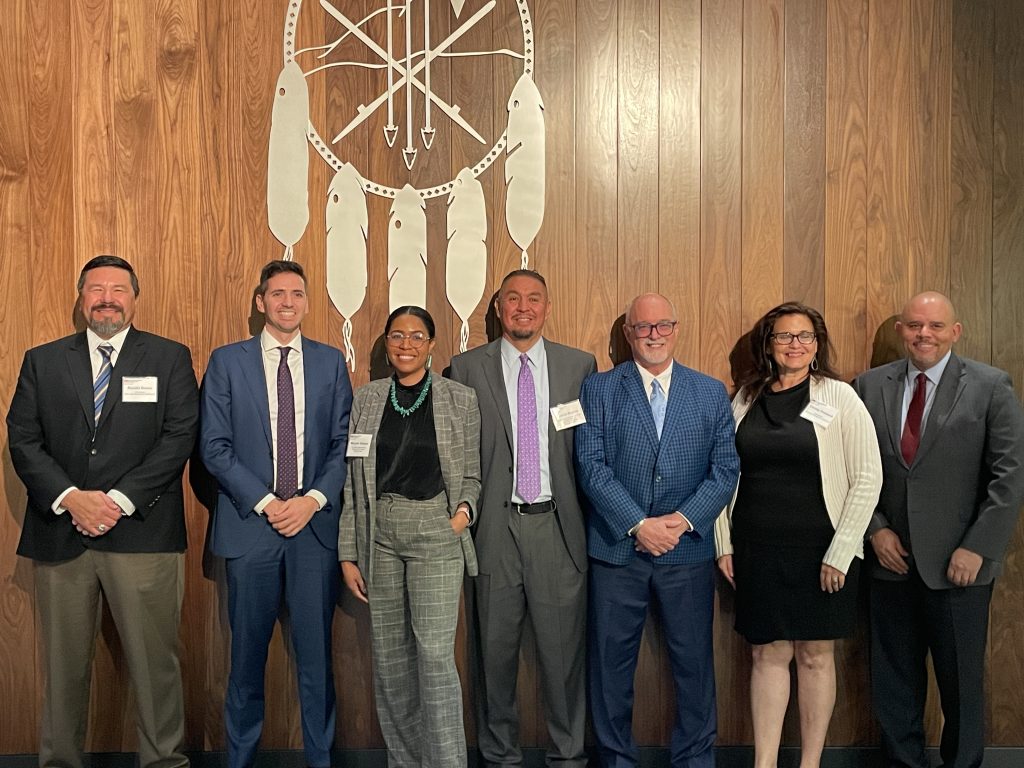
Ann Marie Bledsoe Downes (’94), distinguished public service fellow and professor of practice at ASU Law, opened the webinar with a thoughtful reflection on the history and evolution of Tribal self-governance, setting the stage for a forward-looking discussion. Derrick Beetso (’10), executive director of the Indian Gaming and Tribal Self-Governance programs and professor of practice, moderated a distinguished panel featuring W. Ron Allen, chairman of the Jamestown S’Klallam Tribe; Cheryl Andrews-Maltais, chairwoman of the Wampanoag Tribe of Gay Head Aquinnah; Jason Bruno, director of the Office of Self-Governance at the U.S. Department of the Interior; Benjamin Smith, deputy director of the Indian Health Service; and Jay Spaan, executive director of Tribal Self-Governance and adjunct faculty at ASU Law.

Together, the panelists shared insights drawn from decades of experience in Tribal governance, federal policy and self-determination. The discussion highlighted the progress achieved under Tribal self-governance, reflected on lessons learned over the past five decades and examined strategies for strengthening Tribal sovereignty and nation-building for generations to come.

Student-led analysis on key Tribal tax challenges

On April 4, ASU Law hosted a well-attended, student-led hybrid event titled “Sales Tax and Online Sales Tax Issues in Indian Country.” The program featured Derrick Beetso, Professor of Practice and Director of the Indian Gaming and Tribal Self-Governance Programs at ASU Law, and Patrick Irvine, Adjunct Professor and attorney at Fennemore Craig, who collaborated with law students Mikaela Bledsoe Downes (2L), Imani Hicks (3L), Hunter Mallinger (2L), Morgan Oakes (3L) and Sam Phillips (2L). Together, they examined two critical tax issues affecting Indian Country and presented a white paper on: 1) dual taxation and its impact on Tribes and 2) online sales tax and its interplay with bedrock Indian law principles

These discussions underscored the far-reaching implications of these issues for tribal sovereignty, economic development and self-governance. We thank everyone who attended and contributed to critical conversations on tribal tax issues and sovereignty.

Missed the event? Review the recording and white paper.

Indian Gaming and Tribal Self-Governance: Behind the Scenes with Lynn French

A peek into the MLS course production

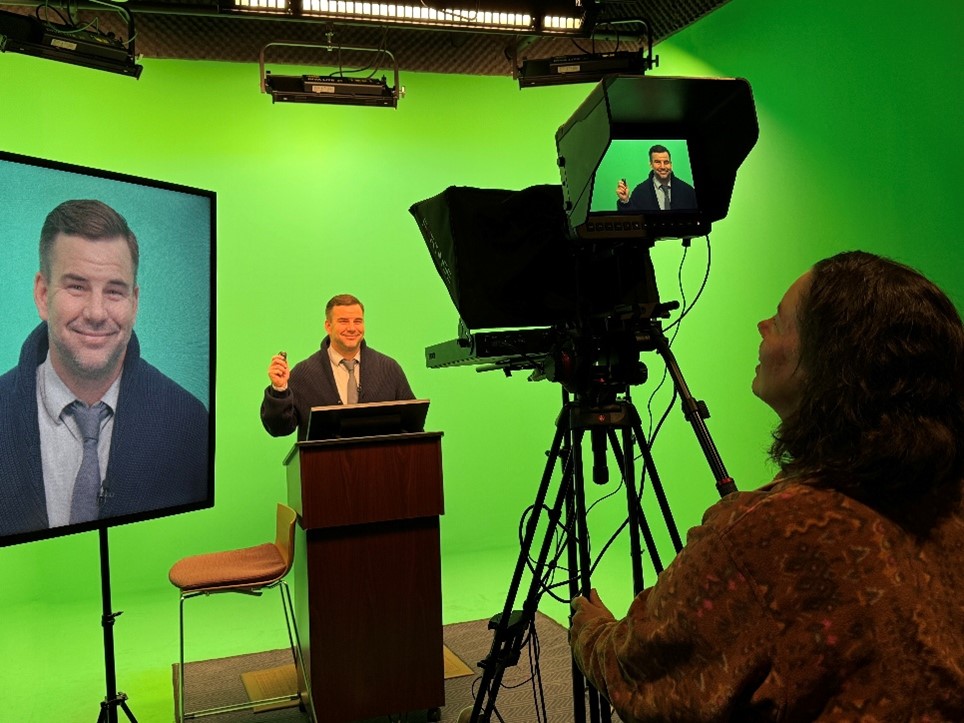
The cameras roll, the microphones are on, and a professor enters the frame to deliver a lecture. Behind the camera, Lynn French, the instructional designer for MLS, ensures every detail is crisp, clear, and seamless.

Under the glare of production lights and the glow of the green screen, one rule is non-negotiable: no lime green or silver sequins. The reasoning is simple, wear the wrong thing, and you might find parts of yourself vanishing into the digital abyss. You also may notice your professor wearing the same outfit across all lectures. That’s no coincidence. While the law is constantly shifting—rewritten, overturned, and reinterpreted—what your professor is wearing doesn’t have to change. In fact, it’s better if their attire doesn’t.

Enter the editing process–-Lynn and her team meticulously trim and stitch together content, ensuring lectures remain accurate and relevant. Take the fall of the Chevron doctrine. Every lecture referencing it had to be reviewed and updated to reflect the shift in legal precedent. Yet on screen, the professor remains unchanged, a steady presence amid the fluid nature of MLS production and the ever-evolving legal landscape. Beyond the polished lectures, Lynn also finds immense joy in capturing the conversations with special guests for lectures. The law comes to life when a professor brings in someone with firsthand legal experience. A time when the case studies, doctrines, and precedents take on human form. MLS course production isn’t just about filming lectures—it’s about making sure students see the law in motion, inconversation, and in action.

“I enjoy capturing conversations between people, like when a professor brings in a person who is a living example of the law, as when a representative from the Ak-Chin Community came in to talk about water rights for a Tribal Self-Governance class.”

MLS students receive scholarship

The Indian Gaming and Tribal Self-Governance Programs are pleased to announce the Master of Legal Studies scholarship winners for the Spring 2025 semester. Congratulations to MLS students Alison Garcia, Erica Green, Mishani Jack-Gonzalez and Savana Saubel!

The students all thanked the Yuhaaviatam of San Manuel Nation, which was exemplified by Jack-Gonzalez, who wrote, “I am honored to receive this support, and I appreciate your generosity. This scholarship has helped relieve some of the burden that comes along with a full-time work schedule and a full-time school schedule. It really motivated me to continue doing my best and even strive for more.”

We also thank the San Manuel Band of Mission Indians for their support, which allows us to offer this scholarship and supports the students’ goals of understanding legal issues and positively impacting Tribal interests.

Five MLS students receive scholarships

The Indian Gaming and Tribal Self-Governance Programs are pleased to announce the Master of Legal Studies scholarship winners for Fall 2024. Congratulations to Evalena Boone, Joseph Bryant, Talitha Ann Rose, Sandi Wilson and Thomas Yazzie! 

We also thank the San Manuel Band of Mission Indians for their support, which allows us to offer this scholarship and supports the students’ goals of understanding legal issues and positively impacting Tribal interests.

2023-2024 Indian Gaming and Tribal-Self Governance programs Year in Review

Derrick Beetso (’10), Director Indian Gaming and Tribal Self-Governance Programs at ASU Law, and Theresa Beaulieu, assistant director, collaborated with ASU Law faculty and staff  for a “Take your kid to work day.” Children of all ages toured the law school, participated in a mock trial and received a behind-the-scenes look at the studios of the ICT Newscast, located at the ASU Walter Cronkite School of Journalism and Mass Communication.

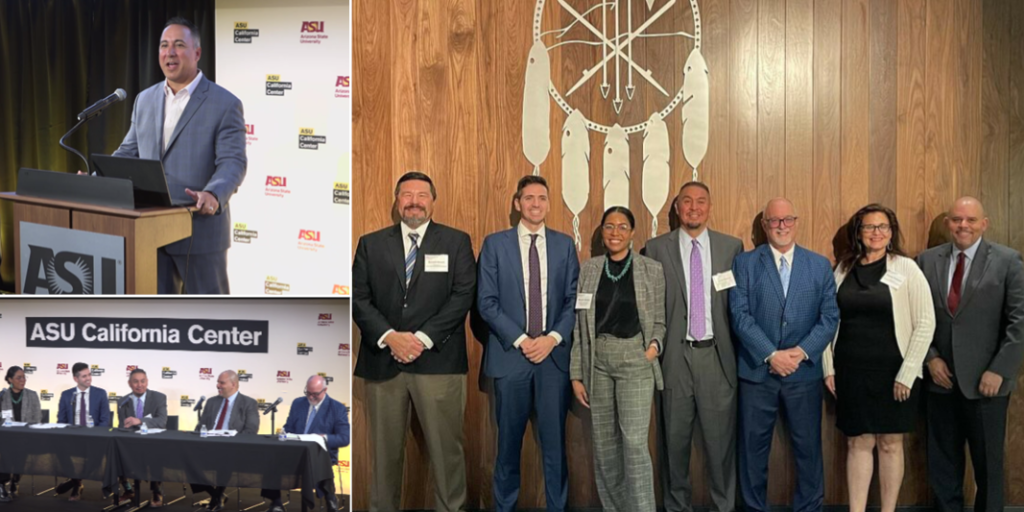
In October, the Programs hosted a conference at the Yuhaaviatam of San Manuel Event Center at ASU California Center.

Along with Rodina Cave Parnall (‘01), director of the American Indian Law Center, Inc., Beaulieu presented a workshop, “Law School and Careers in a Nutshell” at the National Indian Education Association’s annual convention in Albuquerque, New Mexico. This interactive workshop helped students understand pre-law preparation, types of legal degrees and career opportunities.

The Programs also represented at the Arizona Indian Gaming Association’s annual Expo at Harrah’s Ak-Chin Casino. Beaulieu met with those interested in the Master of Legal Studies programs.

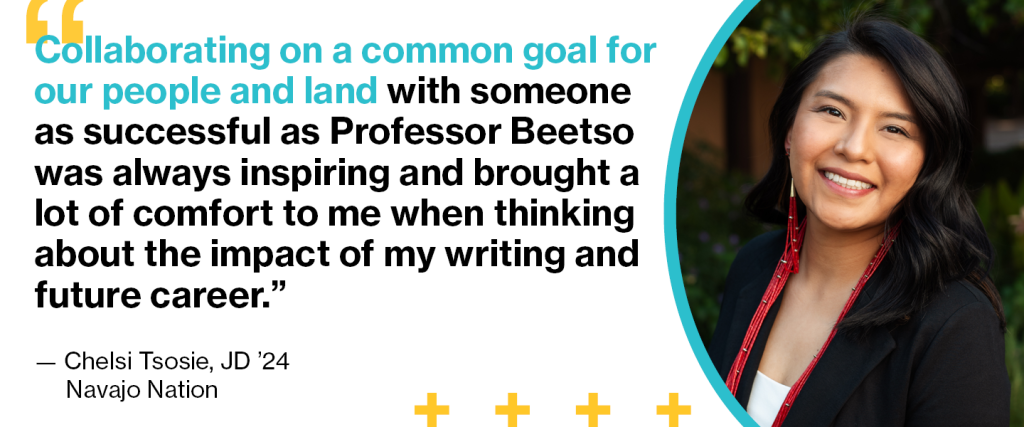
“Professor Beetso enjoys getting students involved in Federal Indian Law projects outside of law school that have been very valuable to me,” said Chelsi Tsosie, JD ’24. “Together, we worked on an amicus brief for Arizona v. Navajo Nation and I would not have had an opportunity like that if he hadn’t reached out to students like me. While working with Professor Beetso on the amicus brief, my Graduations Writing Requirement paper and my paper for his DC Traveling Class, I found it much easier to understand his teachings and feedback about Federal Indian Law topics because of the connection we have to the same Nation. Collaborating on a common goal for our people and land with someone as successful as Professor Beetso was always inspiring and brought a lot of comfort to me when thinking about the impact of my writing and future career.”

Beetso facilitated the opening tribal leaders’ discussion at the inaugural Arizona Indian Gaming Conference hosted by the Arizona Department of Gaming, and Beetso also presented on the Department of the Interior’s recently finalized Tribal-State Gaming Compact regulations at the Western Indian Gaming Conference hosted by the Pechanga Band of Indians.

The Programs were also well represented at the 2024 Tribal Self-Governance Conference at the Wild Horse Pass Resorts & Casino. Jay Spaan, executive director of the Self-Governance Communication and Education Tribal Consortium and ASU Law faculty associate, hosted tribes from across Indian Country at this event.

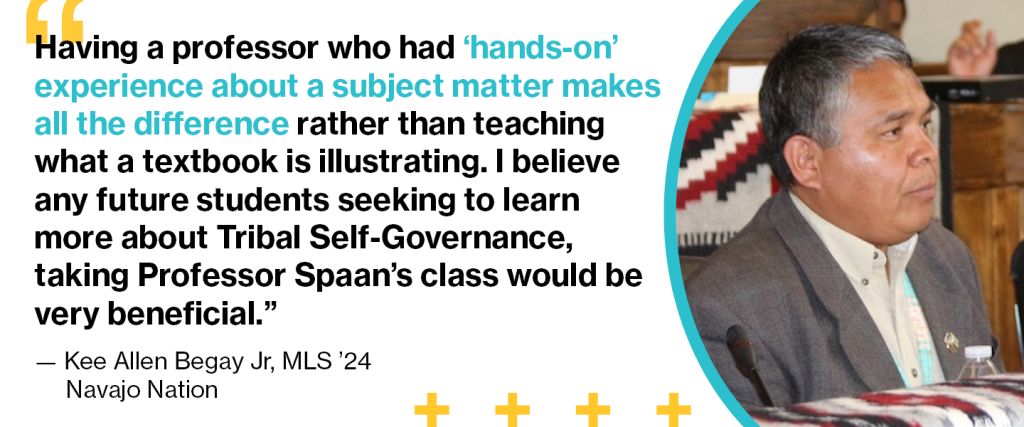
“Professor Spaan went deeper into the content of the policy and had us review and research the policy, and how tribes are benefiting by providing services to their community,” said Kee Allen Begay Jr. (MLS ’24). “Having a professor who had ‘hands-on’ experience about a subject matter makes all the difference rather than teaching what a textbook is illustrating. I believe any future students seeking to learn more about Tribal Self-Governance, taking Professor Spaan class would be very beneficial.” 

Beetso was joined by Francisco Olea (’22) and Jeannie Hovland, Vice-Chair, National Indian Gaming Commission to present on the topic, “What’s New with Gaming? Self-Regulation and Other Hot Topics.”

Beetso also presented with Beaulieu and Joey Dormady, assistant dean, Graduate Programs and New Education Initiatives about the Master of Legal Studies options available at ASU Law, including: Federal Indian Law, Tribal Self-Governance, Indian Gaming and Master of Human Resources and Employment Law. Participants explored multiple work scenarios related to Tribal Self-Governance where it would be helpful to have a greater understanding of the law.

Jennifer Boehm, a Master of Legal Studies student with a focus in Tribal Self-Governance, moderated the panel, “Self-Governance Basics at the Department of Transportation,” which featured Arlando Teller, Assistant Secretary for Tribal Affairs, Department of Transportation; Milo Booth, Tribal Affairs Director, Department of Transportation; and Eldridge Onco, Senior Tribal Affairs Advisor, Department of Transportation

We are proud of the 14 MLS students who graduated during the 2023-2024 academic year, specializing in Indian Gaming, Federal Indian Law, and Tribal Self-Governance. Congratulations to this year’s MLS graduates!

Kee Allen Begay, Jr, Navajo
Randy Bouchard, Cowlitz
Tracy Edwards
Elise-Alexandria Green
Ana Hernandez
Charles LaRoche, Lower Brule Sioux
Delban Leslie
Keely Marquez, Serrano
Rileyann Nallin
Jaylyn Parrent, Salish and Kootenai
Faron Scissons, Rosebud Sioux
Ashlee Swain Rios, Pomo
Maotheeker (Wealthy) Vue
Elizabeth Zingg, Ho-Chunk Nation

Twenty-six students are currently enrolled in these MLS programs. With the support of the San Manuel Band of Mission Indians, the ASU Law’s Indian Gaming and Tribal Self Governance programs were able to support externship experiences for six ILP students. Kaleb Lester (3L) and Maryam Gary Nez (3L) worked at Salt River’s Prosecutor’s Office, Sophie Staires (3L) worked in the Department of Justice’s Environment and Natural Resources Division, and Elizabeth Zingg (MLS ’24) externed at for the Self-Governance Communication and Education Tribal Consortium. Sam Phillips (2L) and Colten Fredericks (2L) are working this summer at the Office of Indian Gaming in Washington, D.C.
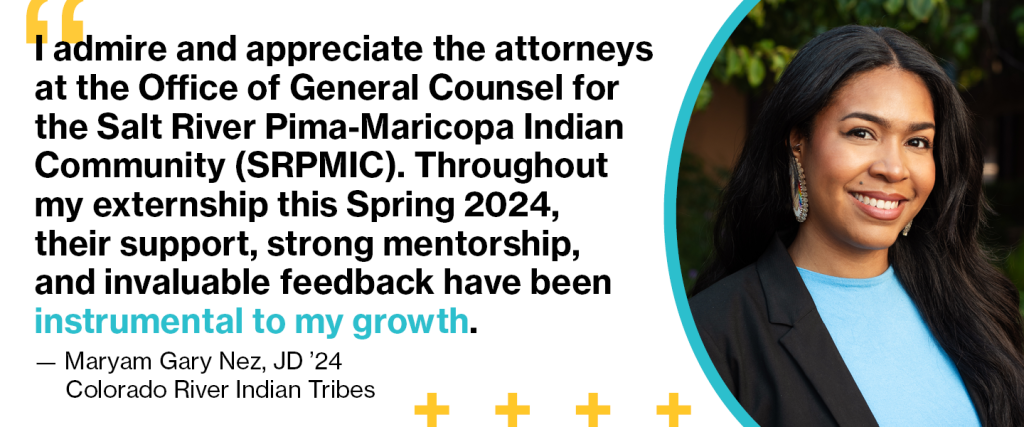
“I admire and appreciate the attorneys at the Office of General Counsel for the Salt River Pima-Maricopa Indian Community (SRPMIC),” said Gary Nez. “Throughout my externship this Spring 2024, their support, strong mentorship, and invaluable feedback have been instrumental to my growth. I appreciate the inclusive environment, and how the attorneys have allowed me to work on projects aligned with my interests. I’ve gained valuable insights into Indian Child Welfare (ICWA) work, which will undoubtedly shape my future career in this field post-graduation. I’m so thankful for their guidance and encouragement.”

Indian Gaming and Tribal Self-Governance Programs hosts conference at ASU California Center

On Oct. 4, the Yuhaaviatam of San Manuel Event Center at ASU California Center hosted the Indian Gaming and Tribal Self-Governance Programs to learn more about Trends in Indian Gaming. Participants were warmly welcomed by Chairwoman Lynn Valbuena from the San Manuel Band of Mission Indians.

Steve Bodmer (’06), from the Pechanga Band of Indians led the event discussing “Current Trends in Indian Gaming – A West Coast Perspective.” Third-year law students Maryam Salazar and Clayton Kinsey facilitated the next panel on the “West Flagler Litigation,” and they were joined by ASU Law’s Indian Gaming and Tribal Self-Governance Director Derrick Beetso (’10), Steve Hart from Lewis Roca and Timothy Evans from the San Manuel Band of Mission Indians.

Christy Hubbard from Lewis Roca engaged the audience at lunch with “‘20 Pairs of Gladiators’ and JB Smoove Walk into a Bar in Pompeii . . . Sports, Gambling, & Advertising Law for Every Age (You’ve Come a Long Way Baby).” Salazar and Kinsey also facilitated the final panel, “Lessons from Lac du Flambeau,” and were joined by Ron Rosier (’95) from Lewis Roca and ASU Law Professor Laura Coordes.

Thank you to our speakers and host for a successful event. We appreciate the San Manuel Band of Mission Indians’ support of legal education for American Indians and Lewis Roca for sponsoring coffee.

For anyone who could not attend, a recording will be available on the Indian Gaming and Tribal Self-Governance Programs website:
law.asu.edu/igg

Consulting with ILP students

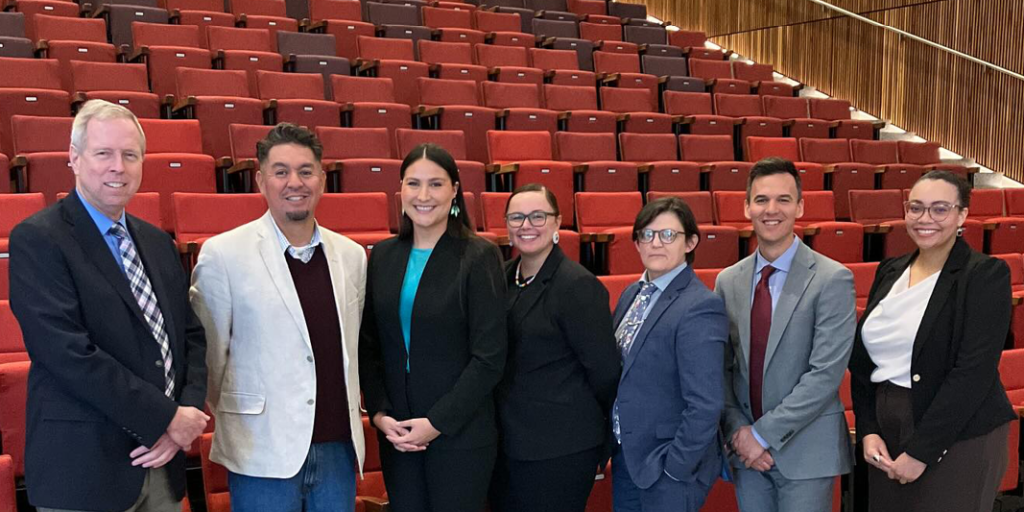
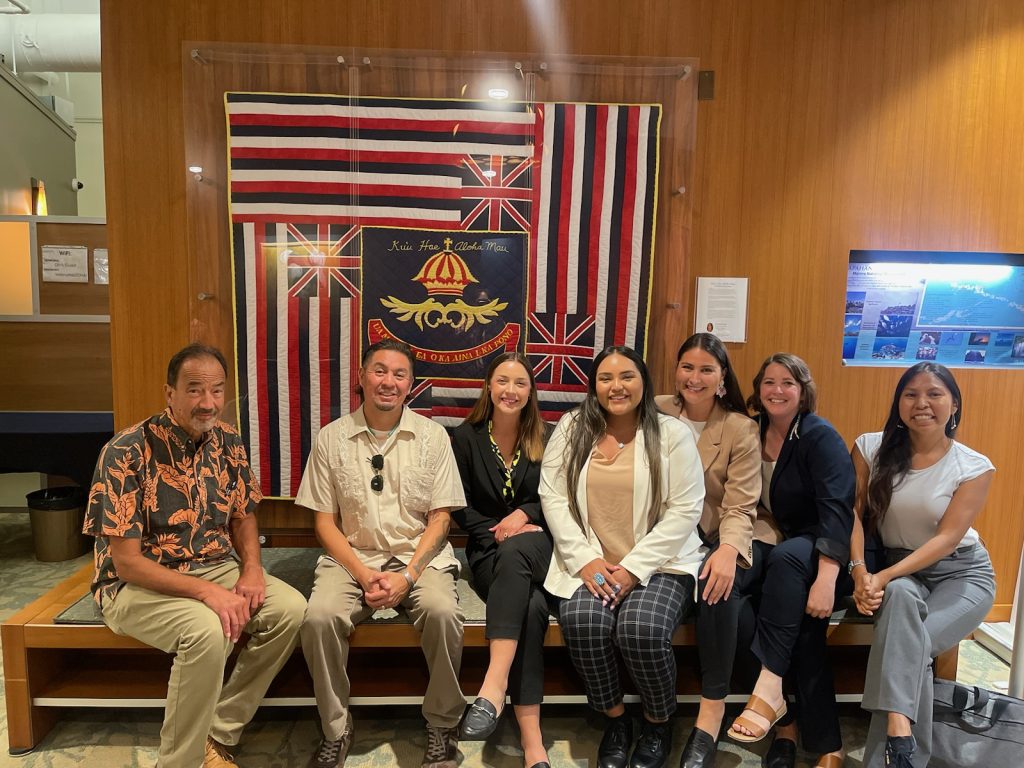
In August, ILP students Keely Driscoll (2L), Shandiin Herrera (2L), Morgan Oakes (2L), Sophie Staires (3L) and Natalia Sells (3L) traveled to O’ahu to assist Professor Derrick Beetso (’10) with a consultation project involving Native Hawaiians and the Office of Hawaiian Affairs (OHA). 

“It was great learning how different communities can participate in the rulemaking process,” said Oakes. “There is nothing that can replicate listening to community members discussing their past experience and concerns with proposed regulations.”

“I really appreciated the opportunity to attend the Honolulu session and learn more about Hawaiian governmental structures and histories that guide the consultation process and responses there,” said Driscoll. “I learned just how distinct the conversations taking place in Hawaii are from those taking place in the states.”

Also pictured: Colin Kippen, interim CEO, OHA.