Clinton testifies in Churchill case

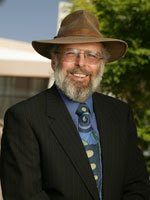
Foundation Professor of Law Robert N. Clinton is scheduled to testify as a defense witness for the University of Colorado on Friday, March 20, at a civil trial in Denver about the discharge of a faculty member.

Clinton served as a member of a Special Investigatory Committee that looked into allegations of research misconduct involving Ward Churchill, a former professor of ethnic studies at the University of Colorado at Boulder.

In its report, issued in May 2006, the committee unanimously found that Churchill committed several forms of academic misconduct, including falsification, plagiarism, failure to comply with established standards regarding author names on publications and serious deviation from accepted practices in reporting results from research. To read the report, click here.
After numerous other proceedings, Churchill ultimately was discharged by the Colorado Board of Regents on an 8-1 vote.

Indian Legal Clinic Recognized by President Crow

President Crow today notified us that Patty Ferguson Bohnee has been selected to receive the 2009 President’s Medal for Social Embeddedness for the Arizona Native Vote — Election Protection Project. This honor recognizes the Indian Legal Clinic, Arizona Indian Gaming Association and the Inter Tribal Council of Arizona project’s superior accomplishment in identifying a community need or issue and developing mutually-supportive partnerships between ASU and Arizona communities to advance successful solutions.

The Arizona Native Vote — Election Protection Project helped strengthen the ties between the Sandra Day O’Connor College of Law and ASU with tribal communities. The Indian Legal Clinic was able to bring ASU, the College of Law, and the Indian Legal Program students, faculty, staff and alumni to tribes across Arizona by setting up volunteers on numerous reservations, a direct response to a need identified by the tribes. Throughout the election season, the Native communities of Arizona knew that the ASU Indian Legal Clinic was the principal resource for voting questions and assistance.

Indian Legal Clinic Assists ACLU of Texas

The ASU Indian Legal Clinic, lead by Professor Patty Ferguson Bohnee, assisted the ACLU of Texas in its effort to enjoin a Texas school district from enforcing a regulation that would prevent a Native American kindergartner from wearing his hair in braids at school in violation of his constitutional rights. The policy prohibits boys from wearing long hair so the family applied for a religious exemption, which the school district denied. Because of the policy, the student was placed in in-school suspension. The student believes “that his long hair is not only an expression of his ancestry and heritage, but also a sacred symbol of his life and experience in this world,” and the requirement that boys’ hair “shall not cover any part of the ear or touch the top of the standard collar in the back” violates his sincerely held religious belief.

Last semester, Student-Attorneys Joe Sarcinella and Mike Carter assisted in drafting the complaint to include provisions regarding the importance of hair and hair’s religious significance to Native Americans. The Student-Attorneys also helped to identify ASU Professor James Riding In as an expert witness for the preliminary injunction hearing. On January 20, 2009, the Southern District of Texas permanently enjoined the School District’s dress code exemption policy, and the student is allowed to attend and participate in regular classroom activities.

Tsosie contributes to book on Indigenous Rights

Tsosie contributes to book on ‘Indigenous Rights’

Rebecca Tsosie Rebecca Tsosie, executive director of the Indian Legal Program, has contributed a paper on “Indigenous Treaty Rights: Sacred obligations, Intercultural Justice and the Discourse of Treaty Rights,” to a book, Indigenous Rights, that will be published by Ashgate in April.

“Throughout the world, indigenous rights have become increasingly prominent and controversial,” states the book’s description. “The recent adoption by the United Nations General Assembly of the Declaration on the Rights of Indigenous Peoples is the latest in a series of significant developments in the recognition of such rights across a range of jurisdictions.

“The papers in this collection address the most important philosophical and practical issues informing the discussion of indigenous rights over the past decade or so, at both the international and national levels. Its contributing authors comprise some of the most interesting and influential indigenous and non-indigenous thinkers presently writing on the topic.”

The book is edited by Anthony J. Connolly, of the Australian National University.

Professor Clinton – Encyclopedia and Hualapai Court of Appeals

Bob Clinton contributed two essays to the Encyclopedia of the Supreme Court of the United States: one on Marbury v. Madison and the other on Mandatory Jurisdiction.

Professor Clinton is now an Associate Justice for the Hualapai Tribe Court of Appeals. He also on the following courts: Chief Justice, Winnebago Supreme Court; Associate Justice, Cheyenne River Sioux Tribal Court of Appeals; and Associate Justice, Colorado River Indian Tribes Court of Appeal

Rebecca Tsosie – AALS and San Carlos Court of Appeals

I am pleased to announce that the Association of American Law schools has appointed Rebecca Tsosie to a three year term on the Association’s Committee on Recruitment and Retention of Minority Law Teachers and Students. This is obviously an extraordinary important committee, and I think it helps the College of Law to have visibility within AALS. I am therefore grateful for Rebecca’s participation and I congratulate her on this honor.

Rebecca is being sworn in on Jan. 30 as a new Court of Appeals Judge for the San Carlos Tribal Court of Appeals, San Carlos Apache Tribe, San Carlos, Arizona. Congratulations Rebecca!

Professor Clinton’s Presentations

Professor Robert N. Clinton of the Indian Legal Program spoke on a panel, “One Country, Separate Sovereigns: Emerging Issues in Indian Law,” at the Appellate Judges Education Institute this weekend. The conference brought together federal and state appellate judges, appellate staff attorneys and appellate lawyers, was held at the Doubletree Paradise Valley Resort in Scottsdale on Nov. 13-16. Also on the panel with Clinton was Judge William Canby Jr. of the 9th U.S. Circuit Court of Appeals and a founding faculty member of the College of Law, Judge Joseph Thomas Flies-Away of the Hualapai Tribal Court, and Elizabeth Rosenbaum, an Indian law practitioner. The panel was moderated by Charles G. Cole of Steptoe & Johnson. Retired U.S. Supreme Court Justice Sandra Day O’Connor spoke at the annual dinner on Nov. 15.

Professor Clinton will be presenting “The Return of Indian Treaty Making” at the University of Kansas on Friday, February 13, 2009. The 2008-2009 Tribal Law and Government Conference will focus on “Innovations in Tribal Governance”

Professor Tsosie’s Presentations

Tsosie at ALA Conference
Rebecca Tsosie presented at the Cultural Heritage and Living Culture Conference in Washington DC. In November the American Library Association’s Office of Information Technology Policy hosted a thoroughly stimulating conference on Cultural Heritage and Living Culture: Defining the U.S. Library Position on Access and Protection of Traditional Cultural Expression. The conference aimed to discuss and debate the present and historical role of archives, libraries, and museums in preserving and providing access to the “traditional cultural expressions” (TCE) of indigenous people and traditional communities worldwide. The conference further aimed to begin forming ALA positions on TCE, including how the rights of native people in their own TCE interact with conventional Western concepts and codifications of intellectual property. ALA will be able to carry forth these positions to discussions with global organizations such as UNESCO and the United Nation’s World Intellectual Property Organization (WIPO). WIPO’s Intergovermental Committee on Intellectual Property and Genetic Resources, Traditional Knowledge, and Folklore (IGC), addresses protections for TCE, which affect and are affected by international copyright treaties and U.S. copyright law.

Tsosie at ITCA Conference
In October, Professor Tsosie presented at the Inter Tribal Council of Arizona’s conference “Future Directions of Tribal Health Research in Arizona” on Intellectual Property and Cultural Property.

Clinton on panel at Appellate Judges Educational Institute

Clinton on panel at Appellate Judges Educational Institute

Robert N. Clinton Professor Robert N. Clinton of the Indian Legal Program will speak on a panel, “One Country, Separate Sovereigns: Emerging Issues in Indian Law,” at the Appellate Judges Education Institute this weekend. The conference, which brings together federal and state appellate judges, appellate staff attorneys and appellate lawyers, will be held at the Doubletree Paradise Valley Resort in Scottsdale on Nov. 13-16. Also on the panel with Clinton will be Judge William Canby Jr. of the 9th U.S. Circuit Court of Appeals and a founding faculty member of the College of Law, Judge Joseph Thomas Flies-Away of the Hualapai Tribal Court, and Elizabeth Rosenbaum, an Indian law practitioner. The panel will be moderated by Charles G. Cole of Steptoe & Johnson. Retired U.S. Supreme Court Justice Sandra Day O’Connor will speak at the annual dinner on Nov. 15. Clinton teaches and writes about federal Indian law, tribal law, and Native American history, constitutional law, federal courts, civil procedure and copyrights. He also serves as Chief Justice of the Winnebago Supreme Court, as Associate Justice of the Cheyenne River Sioux Tribal Court of Appeals, as Associate Justice for the Colorado River Indian Tribes Court of Appeals, and the Hualapai Nation Court of Appeals, and as a temporary judge for other tribes.

Lance Morgan to teach Economic Development In Indian Country

Lance Morgan, CEO of Ho-Chunk, Inc, is scheduled to teach an Economic Development in Indian Country Seminar at the College of Law in January. This one week winter intersession class is open to all law students and graduate students. (If you are not a law student, please check with your College to see how you can register.) I have listed the course information and an article about Lance Morgan below. Please share with anyone you think might be interested.

Economic Development in Indian Country Seminar

SLN #: 90175 Course Prefix: LAW-691 Course Section: 004 Credit Hours: 2Course

Description:This seminar will focus on a wide range of contemporary tribal economic development issues. Historical and relevant federal Indian case law will be used as background material, but the primary purpose of the seminar will be to describe the practical political, legal, economic, structural, and cultural issues faced by tribes when trying to develop their economies. Additional emphasis will be placed on how these tribal initiatives can conflict with federal case law, state jurisdiction, and federal policies towards tribal economic development. The seminar’s focus will be on helping identify and implement creative tribal-based solutions. Although the relevant federal Indian case law will be discussed when necessary, having taken a course in Federal Indian law will be helpful.

Class will meet Monday, January 5, – Friday, January 9 from 9 a.m. – 12 p.m. and 1 p.m. – 3 p.m. The Final Exam will be held at 9:00 am on Monday the 12th.

Additional Information:Credit Hours: 2 Graduation Writing Requirement: No Seminar Writing Requirement: No Skills Requirement: No Final Exam Given: YesFinal Exam Type: In-Class Blackboard Course Site: Yes

Building Homes on the Range
Lance Morgan ’93 helps the Winnebago Tribe shape its future
by Margie Kelley (printed in Harvard Law Bulletin, Fall 2005)

When Lance Morgan ’93 looks out his office window, he sees a collision between the past and the future: A herd of buffalo passes on a hilly expanse nearby, while just beyond it an entire town is beginning to take shape.

“We really are walking in a couple of different worlds–trying to figure out how to be a modern entity and still be Indian,” said Morgan, the founder and CEO of Ho-Chunk Inc., an economic development corporation that is reshaping the future of the Winnebago Tribe of northeastern Nebraska.

A decade ago, this 134,000-acre reservation nestled in the hills along the Missouri River was quickly becoming a ghost town. There was no town center–just scattered rows of government housing, a gas station and a grocery store. Winnebago families had been leaving the impoverished reservation for years in search of work, and the community was suffering.

Morgan was raised in Omaha, though he and his family spent summers and holidays on the reservation. Growing up poor, he dreamed of becoming financially independent. He joined the military to pay for college at the University of Nebraska-Lincoln and then attended Harvard Law School.

After HLS, Morgan went to work at a Minneapolis law firm that represented Indian tribes. When his own tribe’s casino venture was threatened by new competition, the tribal council approached him for help diversifying its revenue stream. “I basically couldn’t let it go,” said Morgan, who’d written his third-year law paper on economic development. “I left my job to come do this.”
Using revenue from the WinneVegas operation, the tribe’s lone casino, Morgan founded Ho-Chunk Inc., a startup that has invested in businesses on the reservation that provide the community with goods and services and, more important, jobs and job training.

Since its launch in 1994, Ho-Chunk (loosely meaning “the people”) has gone from $400,000 in annual revenue to a projected $115 million this year. It employs 499 people in 11 companies focused on everything from housing construction and banking to hotels, tobacco sales and the Internet. One of its Web sites, Indianz.com, is, according to Morgan, the most popular Native American destination online.

But perhaps most critical to the tribe’s future has been another HCI venture, the nonprofit Ho-Chunk Community Development Corp., which is building a town from scratch on a 28,000-acre stretch of the reservation bought from the federal government.

Ho-Chunk Village will include the reservation’s first-ever town center, with commercial and government buildings surrounded by single-family homes and townhouses that Morgan says will be sold to tribal members at affordable prices.

“Right now about 70 percent of housing on the reservation is government-owned,” said Morgan. Under this system, he explains, even those who are doing well can’t own their homes, and the lack of tax revenue makes it hard for the community to thrive.

HCI’s impact on the Winnebago Tribe can’t be overstated. Already, it has given more than $30 million back to the community in jobs, scholarships, expansion of the tribal college, and job training programs. It has also had a major role in building a new high school and a hospital.

Ho-Chunk Inc.’s success has been noticed by other tribes. Morgan has already consulted with 74 tribes seeking to replicate his model for economic development. He is also a consultant to the federal Bureau of Indian Affairs and lectures around the country on the state of reservations.
Morgan envisions an end to the archaic reservation system that is rooted in long-outdated assumptions about the inability of tribes to manage their own affairs.

“We’ve been living under this system for so long we’ve forgotten the underlying reasons for it,” he said. “Every other person in this country can control his own land, but we can’t. Now, we’re taking control of our destiny, and it makes me proud.”